
Bone Density and Strength Training for Women: What You Need to Know.
There's a health issue affecting millions of Australian women that has no symptoms until something breaks.
Osteoporosis, the progressive weakening of bones, affects one in three women over 50 in Australia. Most had no idea it was happening until a fracture revealed what years of silent bone loss had been doing.
The good news is that bone density is not just something that happens to you. It responds to what you do. And strength training, the kind we programme every session at Better Gym in Glynde, is one of the most powerful tools available for protecting and rebuilding it.
Here's what the research actually says, and why the decade you're in right now matters more than you might think.

The Numbers Worth Knowing
1 in 3 | Women over 50 in Australia will experience an osteoporosis-related fracture in their lifetime.
Up to 15% | Bone density can decline by up to 15% in the first five years after menopause without intervention.
1-3% increase | Regular resistance training can increase bone mineral density by 1–3% and significantly slow the rate of loss.
Up to 40% | Women can lose up to 40% of their trabecular bone mass — the spongy inner bone tissue most vulnerable to fracture — over their lifetime.
What is Bone Density and Why Does it Matter?
Your bones are living tissue - constantly being broken down and rebuilt in a process called bone remodelling. When you're young, the rebuilding outpaces the breakdown. But as you age, that balance shifts. And after menopause, when oestrogen levels drop significantly, the shift accelerates. Breakdown starts outpacing rebuilding - and the result is bones that become progressively less dense are more vulnerable to fracture.
The Critical Windows of Strength Training
Most people don’t realise there isn't one single age that matters most. There are three distinct windows, each with different implications for what you should be doing.
The Building Window: Your 20s
The maximum density your bones will ever reach is achieved in your late 20s to early 30s. Think of it like a bone bank account: the more you deposit early, the more you have to draw from when you begin ageing.
The Prevention Window: Between 35 to 50
From around 35, bone density begins declining gradually at around 0.5–1% per year. This is quiet and symptom-free, which is exactly what makes it easy to ignore. Don't ignore it. Women who build consistent strength training habits in their 30s and 40s arrive at menopause with a significantly stronger foundation. The work you do in this window directly determines your fracture risk twenty years from now.
The Intervention Window: Your 50s and Beyond
In the first five to seven years after menopause, bone loss can accelerate to up to 3% per year. This is when osteoporosis most commonly develops. But here's what the research says: strength training slows that loss, maintains bone mineral density, and in many cases produces modest improvements. A meta-analysis of 18 randomised controlled trials found resistance training significantly improved bone density at the hip and spine, the two most fracture-vulnerable sites in the body. And it is never too late to start. Studies show meaningful improvements in women who began strength training for the first time in their 60s and 70s.
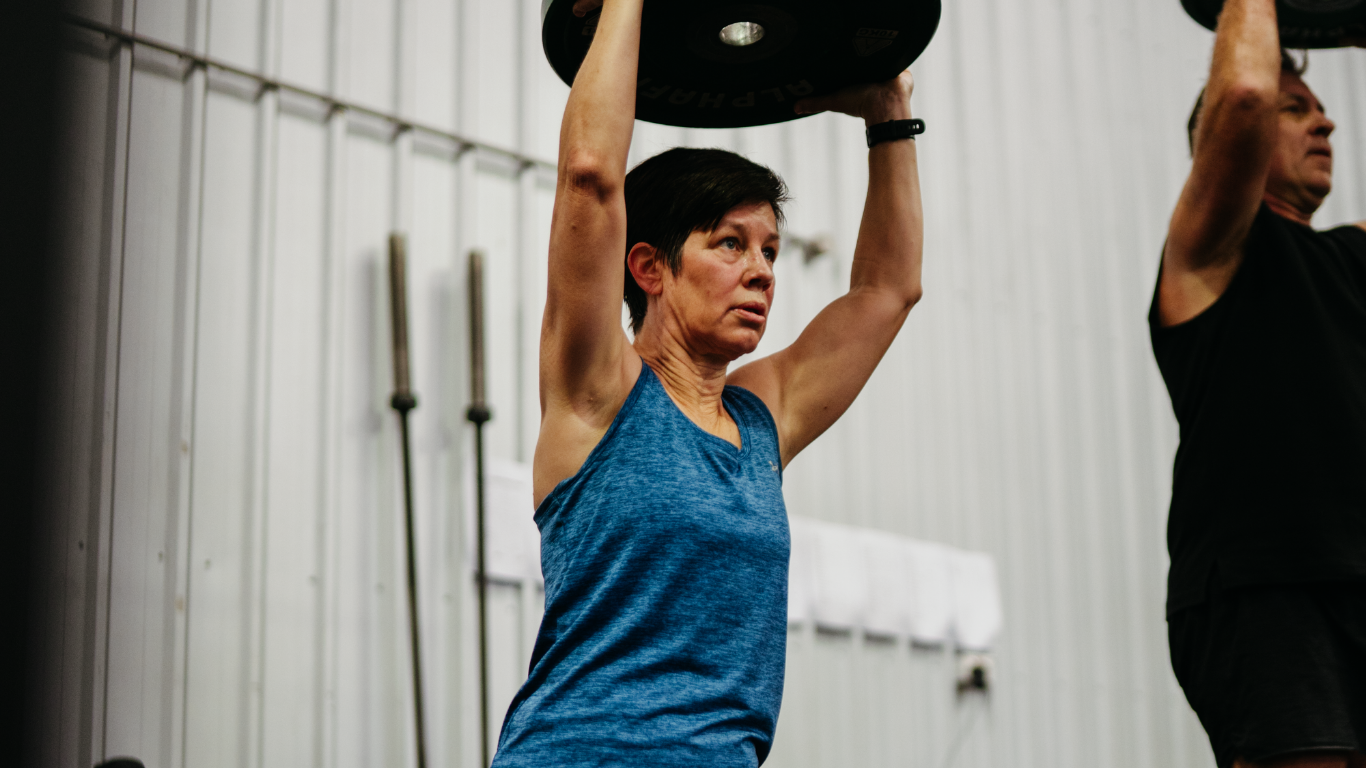
Why strength training specifically?
Not all exercise builds bone density equally. Swimming, cycling and walking are great for your health but they don't have enough load to stimulate meaningful bone remodelling.
Bones respond to mechanical loading. The heavier and more progressive the training, the stronger the stimulus. The exercises with the strongest evidence are the ones that load the hip and spine directly (i.e. barbell squats, deadlifts, bench press, pull ups, rows, lunges and step-ups).
These are the exact compound movements we perform in every Group Coaching workout at Better Gym.

What about Reformer Pilates?
Reformer Pilates plays a different but equally important role in bone health. The spring resistance creates muscular loading that stimulates bone tissue (particularly in the spine, hips and shoulders) while also building the deep core and postural strength that supports the skeleton.
But perhaps the most compelling reason to add Pilates is this: research in Osteoporosis International found that fall prevention is as important as bone density itself in reducing fracture risk. A bone that never gets fractured because the person never falls is functionally better than a denser bone in someone with poor balance.
That's why many of our members do both. Strength training builds the bone density. Pilates builds the balance that protects it.
What this looks like at Better Gym
At Better Gym, both our Group Coaching and Reformer Pilates classes are built for longevity and bone health. Every new member starts with a personal Goal Setting Plan - a one-on-one session with one of our coaches where we learn your history, your goals, and any health considerations to work around. For women in their 40s, 50s and beyond, bone health is something we factor in from day one.
The bottom line
Bone density loss is silent, progressive, and largely preventable. The research is clear: resistance training (whether Reformer Pilates or weights training) is one of the most effective tools available - at any age, in any decade.
In your 30s? You're in the prevention window. Build the habit now and you'll arrive at menopause with a foundation that protects you for life.
In your 40s or 50s? This is the most important window of all. The training you do in the next six weeks will echo for the next thirty years.
Post-menopausal? It is not too late. The body still responds. The research proves it.
Whatever stage you're in, Better Gym in Glynde is built for it. We program for longevity, bone density, and real strength. That's not a tagline, it's what every class is built around.
Questions we hear often
-
No.
Research is clear on this. Studies have shown meaningful bone density improvements in women who began resistance training for the first time in their 60s and 70s. The body remains responsive to the stimulus of strength training throughout life. Starting now is always better than not starting.
-
Strength training is generally recommended for women with osteoporosis, but it should be supervised and appropriately modified. If you have a confirmed diagnosis, speak with your GP before starting a new exercise programme. In most cases, a carefully coached strength programme is not only safe but actively beneficial. Let our coaches know your situation and we'll work with you accordingly.
-
No.
Building significant muscle bulk requires very specific training, very high caloric intake, and for women, a hormonal environment that makes it physiologically very difficult. Strength training at Better Gym will make you stronger, improve your bone density, and improve your body composition - but it will not make you bulky. This concern stops many women from doing the training that would most benefit their long-term health.
-
The research supports two to three sessions of resistance-based training per week as sufficient to produce meaningful bone density benefits. Our recommendation is three Group Coaching or Reformer Pilates classes per week. Even two sessions consistently over a 6-week block will produce measurable improvements in strength and meaningful stimulus for bone health.
Ready to invest in your long-term health?
Try 4 weeks of unlimited Group Coaching + Reformer Pilates at Better Gym in Glynde, including a personal Goal Setting Plan with one of our coaches. $160. No lock-in.
